The Science of Saponification:
- Linda Tacey
- Oct 6, 2025
- 3 min read

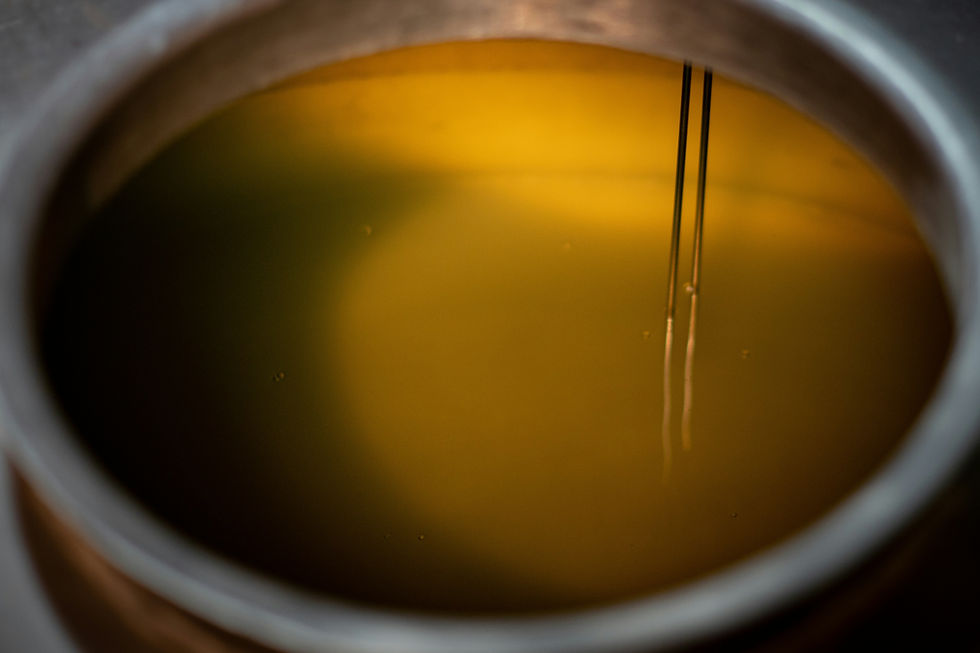
How Natural Soap Is Made
Soap is one of the oldest and most essential creations in human history. While today’s soap can feel like a simple household item, the process that creates it—saponification—is a fascinating chemical reaction that transforms oils and fats into a cleansing, nourishing bar.
For those who enjoy natural soap making, understanding saponification is key to mastering the craft. Let’s explore what happens behind the scenes and why it’s the heart of every bar of natural soap.
What Is Saponification?
The word saponification comes from the Latin word sapo, meaning “soap.” In simple terms, it is the chemical reaction between fats or oils and an alkali (lye) that produces soap and glycerin.
Fats & Oils (Triglycerides): These are natural oils like olive, coconut, shea butter, or argan oil. Chemically, they are composed of triglycerides—molecules made of glycerol and fatty acids.
Lye (Alkali): Traditionally, wood ash was used, but today natural soap makers use sodium hydroxide (NaOH) for solid soap or potassium hydroxide (KOH) for liquid soap.
When these two ingredients combine in the right proportions, the triglycerides break down, and a new substance—soap—is formed.
The Chemical Reaction Explained
Saponification works like this:
Breaking Down Triglycerides When lye is added to oils, it reacts with the triglycerides in the oils. The sodium hydroxide attacks the ester bonds that link glycerol to fatty acids.
Release of Glycerol This reaction frees glycerol (or glycerin), a natural humectant that attracts moisture to the skin. Unlike commercial soap manufacturers who often remove glycerin for use in other products, natural soap makers usually leave it in, which makes handmade soap much more moisturizing.
Formation of Soap Molecules The fatty acids combine with sodium (from the lye) to create sodium salts of fatty acids—this is the actual soap. These soap molecules have a unique structure:
A hydrophilic head (water-loving) that bonds with water.
A hydrophobic tail (oil-loving) that bonds with dirt and oils.
This dual nature allows soap to clean by lifting dirt and grease from the skin and rinsing it away with water.
The Balanced Equation

Here’s a simplified chemical equation:

Fat (triglyceride) + NaOH → Glycerol + Soap (sodium salt of fatty acid)

For example, if we use stearic acid (a fatty acid found in many plant butters):

C₁₇H₃₅COOH + NaOH → C₁₇H₃₅COONa (soap) + H₂O
Why Ratios Matter
Soap makers carefully calculate the exact amount of lye needed for each recipe. Too little lye and the oils won’t fully convert, leaving a greasy bar. Too much lye and the soap will be harsh and irritating. This balance is called superfatting—leaving a small percentage of oils unreacted to ensure mildness and extra nourishment for the skin.
Cold Process vs. Hot Process Saponification
There are different methods of encouraging saponification:
Cold Process Soap: Oils and lye are blended at a controlled temperature and poured into molds. The soap hardens over several weeks as saponification completes naturally during curing. This method retains more of the oils’ natural benefits and creates a gentle bar.
Hot Process Soap: The mixture is heated, which speeds up saponification. The soap can be used sooner, though the texture is often more rustic.
Both methods result in true soap through the same chemical process.
The Role of Natural Oils in Saponification
Different oils contribute different properties to soap:
Coconut oil – produces a bubbly, cleansing lather.
Olive oil – makes a mild, moisturizing bar.
Shea butter – adds creaminess and conditioning.
By blending oils, soap makers craft bars with the perfect balance of hardness, lather, and moisturizing qualities.

Why Saponification Matters for Natural Soap
For natural soap lovers, saponification is more than just science—it’s a way to create a gentle, sustainable, and nourishing product. Unlike detergent-based cleansers, natural soap contains no synthetic foaming agents or harsh chemicals. The process itself is chemical-free once complete because all lye is consumed during saponification, leaving behind only soap and glycerin.
This means a bar of natural soap is:
Safe – no residual lye remains if made correctly.
Moisturizing – glycerin helps retain skin hydration.
Eco-friendly – biodegradable and free from synthetic additives.

OILS (Triglycerides) + LYE (NaOH)
↓
Chemical Reaction (Saponification)
↓
SOAP (Fatty acid salts) + GLYCERIN
Conclusion
Saponification is the magical transformation that turns everyday oils into luxurious natural soap. This chemical reaction, simple yet profound, is what makes handcrafted soap unique. By understanding how saponification works, you can appreciate the balance of science and art that goes into every bar. The next time you lather up with a bar of natural soap, remember—it’s more than just cleansing; it’s chemistry at work, refined through centuries of tradition.


Comments